
Making Friends with Foreigners
I am an electrical engineer, multimedia artist, and musician. I recently took a gap year from engineering to develop myself as a traveler, artist, and human.


I graduated from UCLA with a B.S. in Electrical Engineering in 2024. Immediately after graduation, I worked for Arc Boat Company as an electrical systems intern. Shortly after my internship ended, I took a gap year and developed mom-lore that I will be telling people about for the rest of my life.
It would be impossible to write about everything I learned abroad, but I name a few in this article. These are portraits of people who shaped the way I design spaces, the way I make coffee, my understanding of governments, and my knowledge of musical improvisation. This trip was my second education, and in a world more divided than ever, I consider it important and necessary to cross borders and learn from our siblings.
As a brief note, please subscribe for many thoughts on everything:
The timeline
September 2024: Chile
November 2024: Vietnam
December 2024: Japan
January 2025: India & Nepal
February 2025: Hong Kong & Los Angeles
March 2025: Portugal & Spain
April 2025: April 2025: California/Oregon border to Mendocino by bike
May 2025: 6 week pottery class with my mom
June 2025: Built two redwood tables
July 2025: Hawaii for 3 weeks
August/Sept 2025: Moved to Culver City, started a graduate degree at UCLA, started work as a part time hardware engineer.
The packing list
I traveled out of one backpack to save money on luggage fees and travel with ease. I had one pair of flip flops, one pair of trail running shoes, two pairs of pants (one durable pair and one linen), one pair of shorts, one pair of sweatpants, a long sleeve, a short sleeve, a rain jacket, a down jacket, and a mid-layer. I brought a camera, laptop, kindle, fennel seeds, toiletries, a universal outlet adapter, meds, earrings, pens, earbuds, in-ear monitors, a 400-page notebook, a portable microphone, sewing kit, two pairs of wool socks, ten pairs of underwear, one bra, gloves, a beanie, a small towel, some carabiners (super useful btw), and my passport. For five months, I pared my existence down to the bare minimum. I planned for entertainment, warmth, creativity, variability, and connection. I wanted my belongings to be efficient and ease traveling rather than becoming a hindrance.
My second education
I didn’t expect to forge strong bonds with the locals of the places I went. By traveling that light, I was able to change plans and countries at a moment’s notice; it afforded me flexibility to enjoy experiences that I could never have predicted from my couch at home.
Maybe it sounds naive, but one of my greatest takeaways was what it looks like to be happy under geopolitical and economic conditions different from mine. I grew up in California, specifically the Bay Area. This upbringing was insular - in the sense that California has all you could ever need. For many, it is the final destination. While the rest of my peers started full time jobs, I chose to travel the world using the savings from my internship; I wanted to pull the curtain back behind some of the obvious truths I had grown up believing. I wanted to know why things were the way they were. US citizens enjoy a strong passport and a strong dollar abroad. What does that feel like for residents of those countries? How is healthcare implemented in a socialist or communist state? What does education look like? What are kids my age doing? What do they have strong opinions about, and what are their career prospects? What about people like me - that is to say, musicians and engineers around the age of 22 or 23? What are they thinking about?
In Lisbon, I explored the music scene and started to answer some of these questions. At Tejo bar, I found a community of musicians of ages 20-60. They gather nightly to jam until all sound has been exhausted from their pores. The talent in that place is tangible. And at Patch Point, a synthesizer manufacturer with three in-person stores, a recording studio can be booked for free. People hang out in this musical third space, soldering electronics and jamming together.
Elsewhere, I learned about governmental structures, political parties, post-imperial societies, and the impacts of revolutions on everyday life. In post-imperial Portugal and Japan, both countries have dedicated wildly different resources to transportation infrastructure and industrialization. Before my travels, I didn’t know anything about the 1973 Chilean coup d’état, or that (at the time of my visit) they had a young leftist president named Gabriel Boric with huge promises. I also learned that Vietnam has set forth goals to compete on the global GDP stage by 2050. Anecdotally, I observed that Vietnam seemed to be highly capitalist in practice but communist in belief. The first “people” feature, in fact, is a young entrepreneurial artist running a beautiful third space / cafe in Vietnam. This dichotomy felt contradictory at first. It made a bit more sense when I found a government declaration that Vietnam will “by 2050, become a developed, high-income country”.
I met stewards of responsible tourism, caring deeply for their communities and building resources for economic growth. I found artists, farmers, engineers, scientists, and musicians. With each person who offered me their time (and in many cases their food), I learned a little bit more about the world. On the heels of wrapping up 23 years of formal schooling, I affectionately refer to this trip as my “second education”. Perhaps earth does not feel so big anymore.
The people


Thu (Tam Cốc, Vietnam): multimedia artist & cafe owner
Thu is the owner of a recently launched cafe called Chạm Tam Cốc. She’s also one of the most talented painters I have ever met. Her curiosity and youth are so vital to her core that I was surprised when she mentioned she had kids and a husband. I went there on a whim to get a late night snack, and noticed the cafe was divided into two wings. The right wing had the cafe, with a kiosk, food on display, and hungry travelers. But the left wing, separated by a small waterway with stone steps, was stacked to the brim with vibrant paintings done by Thu and her brother. I found myself in there, and Thu found me. She was interested in the fact that I’m Indian: Would I like to try her chole curry? She’s trying out a new vegan dish for the menu. I replied that I certainly would, and over the course of our week there we spent every day at that cafe. She taught us how to carve wooden block prints and embroider, and gifted us paper mache festival masks for us to paint.


Taishi (Kurobe, Toyama, Japan): Airbnb host & tour guide
Taishi was the host of my Airbnb in Kurobe, Toyama, Japan. I booked his airbnb because it was cheap, and it was cheap because it was a room in his house. As a solo female traveler, this maybe wasn’t the most well thought out decision, but the reviews were stellar. It turned out to be one of the coolest experiences I had in the country. Taishi took me to the neighborhood’s community center, where the event of the week was a cooking class for men so the wives could catch a break. He also took me on a few hikes in his neighborhood. Here he is pictured carrying an axe, because he’s scared of wild boar. Taishi and his friend Tomoaki told me, on this hike, of how they wanted to revive the tourism and farming industries in their town. We passed one overgrown rice paddy after another, and every time we saw this sight they would sigh, sweeping their hands out in exasperation. They are both passionate about preserving their culture, and illustrated this tension with a story about Casio: according to them, only after Americans picked up the G-Shock trend did Japanese people see Casio’s worth. Their focus is on flipping the script and helping the local population enjoy their nature. I admire how laser focused Taishi is on creating diverse and sustainable tourist experiences in his hometown, where the economy has been commandeered by the YKK zipper company.
Akio Sato (Motohakone, Kanagawa, Japan): retired chemist & cafe owner
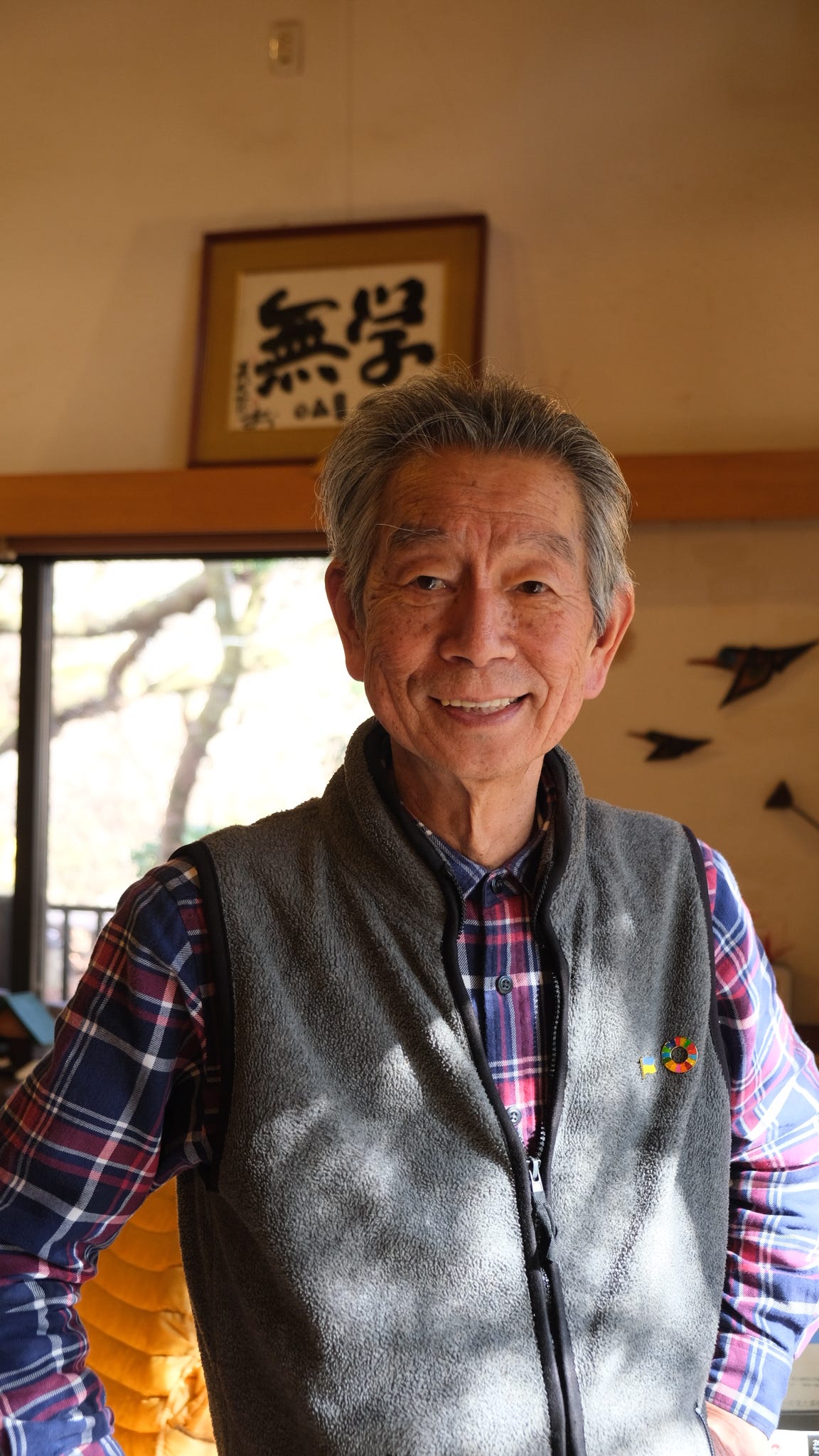
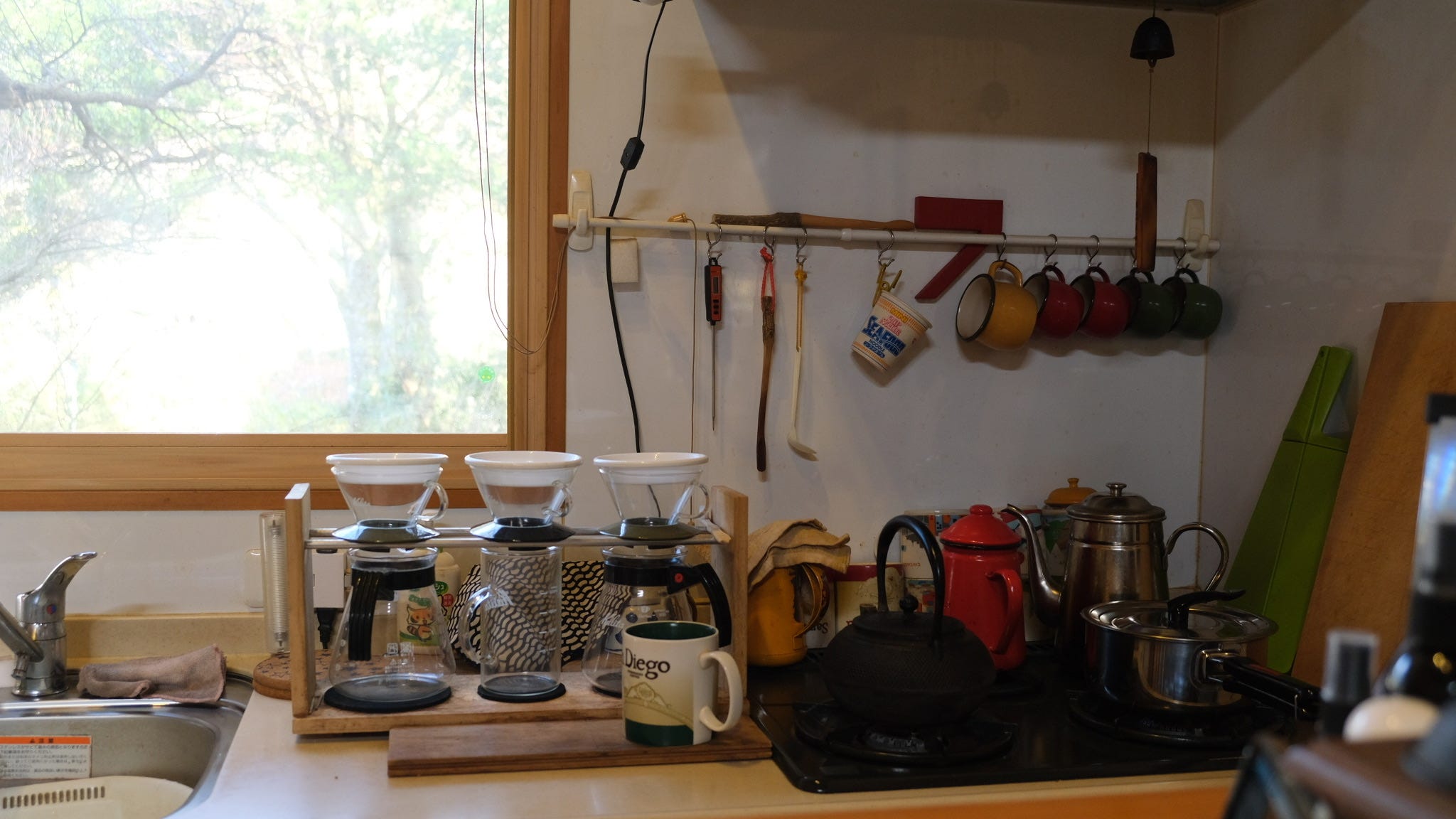
Akio Sato is a retired chemist from Fujifilm. Nowadays, Sato-San runs a cafe for tourists in Motohakone. Which is to say, he opens up the doors to his home, and serves pourover coffee and pound cake for 800 yen. It’s a clever way to keep oneself company. Sato-San revolutionized my coffee routine. After this I took a pottery class and threw a V60. Every morning I follow his instructions: keep beans in the freezer so they last longer, finely grind them, keep the water flowing through the filter, add cream to round out the taste. We message each other on Instagram and he frequently swipes up on my stories with the clapping emoji. I liked his world peace pin.


Tete (Paknajol, Kathmandu, Nepal): tattoo artist
Tete owns Kalki Tattoo Studio in Kathmandu, Nepal. Tete builds Didgeridoos, tattoos for a living, and is friends with the important few comprising the Kathmandu Reggae / recording arts scene. He has a distinct freehand style and runs a two-floor art studio with his cousin, a full time painter.
Abhishek (Annapurna Conservation Area, Nepal): porter
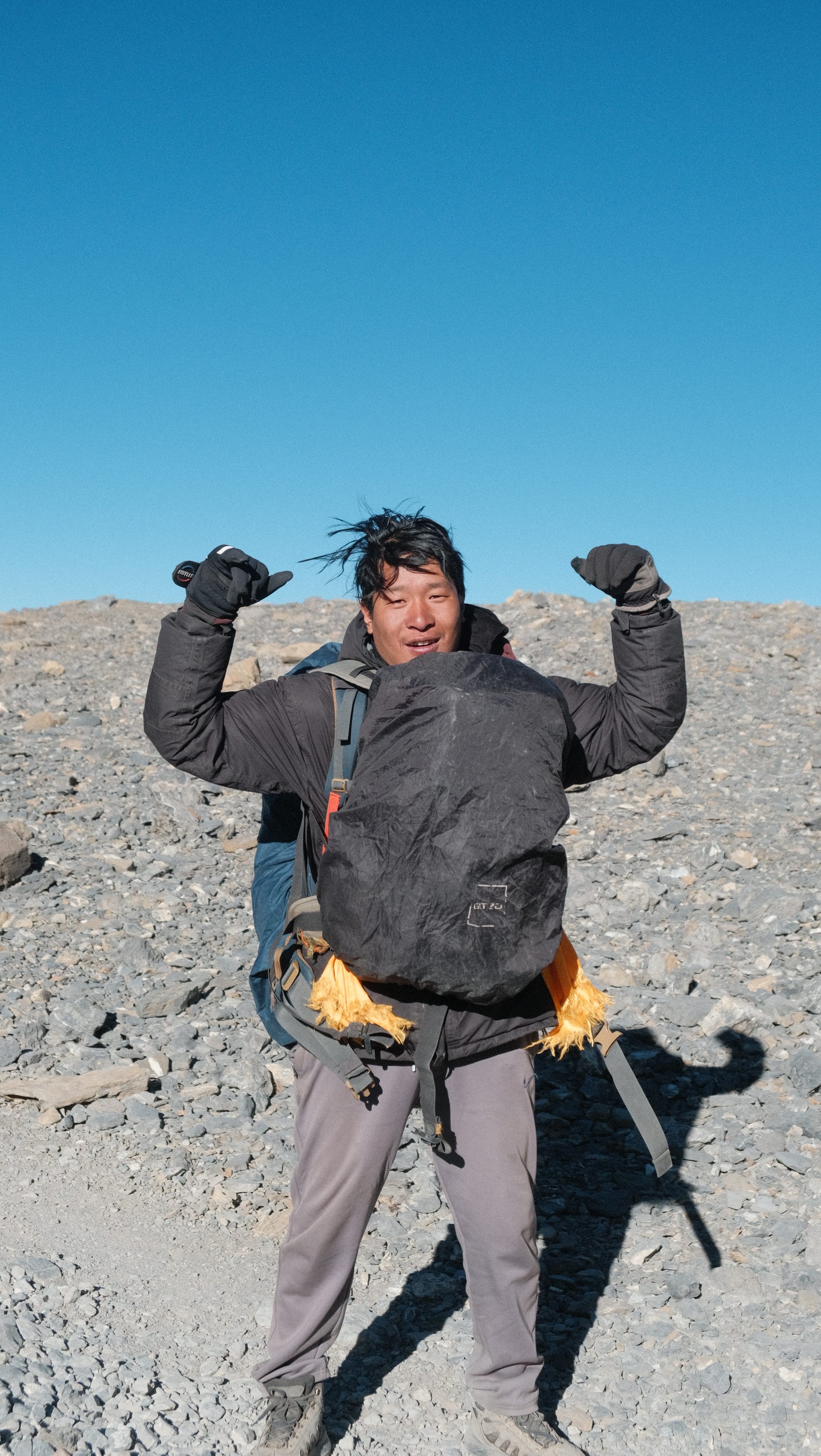
Abhishek works as a porter, and I met him carrying client luggage on the Annapurna Circuit. Taken at 16,000 feet in January. When I took this picture, Abhishek had a cough, grey sweatpants, & 100 pounds on his back. He was still faster than his clients by hours.
Namgel Sherpa (Kathmandu, Nepal): himalayan expedition guide
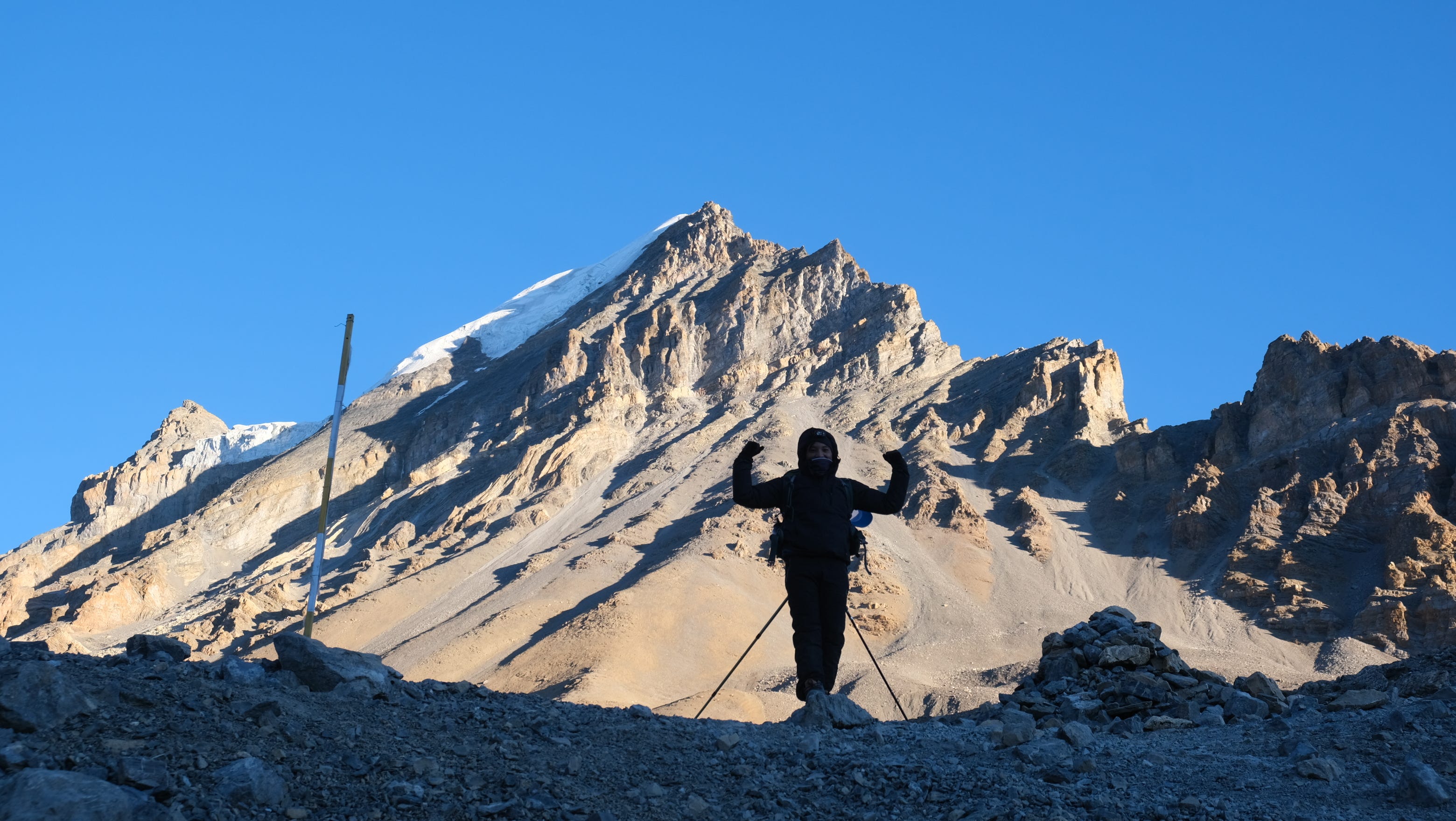
Namgel was our guide on the Annapurna Circuit (ACT). Not far from us in age, he quickly became our friend as we chatted about our cultural similarities and differences. For us, the ACT was a journey. For Namgel it was a short stroll. In addition to being a guide, Namgel works to improve the working conditions of Nepali porters and cleans up the trash left behind from foreign-funded Himalayan expeditions.
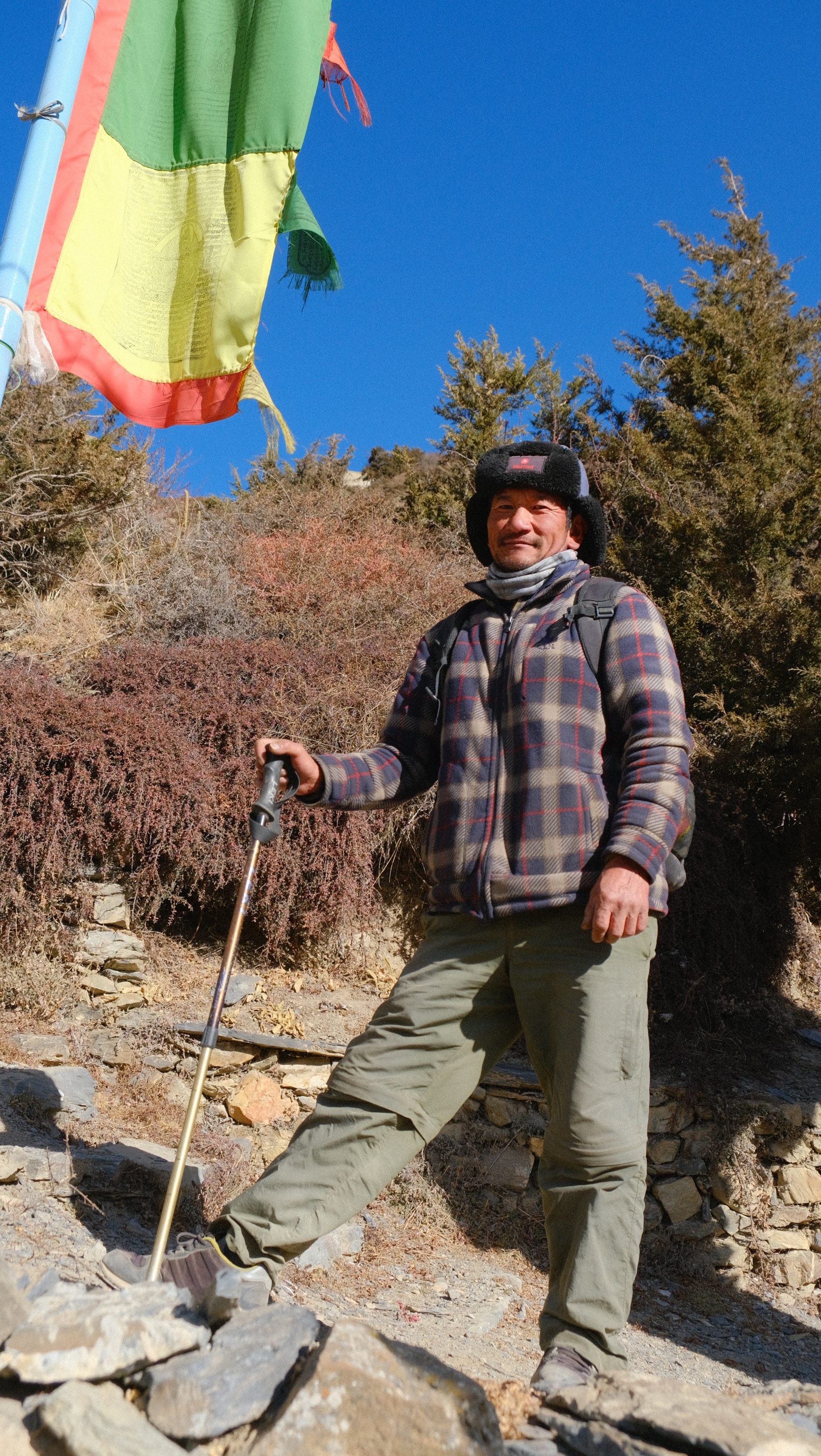
Banza (Yakharka, Nepal): snow leopard researcher & farmer
We only met Banza briefly, just before we reached Yakharka. We learned that he operates cameras in the Himalayas for a PhD student, in hopes that he’ll catch a rare leopard sighting.


Thang (Nha Trang, Vietnam): daily swimmer
Thang’s name means “bread” or “victory after a win”. He studied in the US from 1974-1975, swims and body surfs every day, and drags his wife along to the beach via motorbike. The locals swim / dunk / body surf at 5:30 am daily, which we learned they do because the UV is lower then. I don’t know if I’ve ever seen “whimsy” personified so well. The residents of Nha Trang, spanning all age groups, have whimsy.


Brian Ransom (Mendocino, California): ceramicist & retired music professor
Brian makes ceramic instruments at a pottery collective in Mendocino. He was the college professor of Nick, the kind ceramicist who picked my friend and I up when we were stranded on the side of the road during our bike trip.
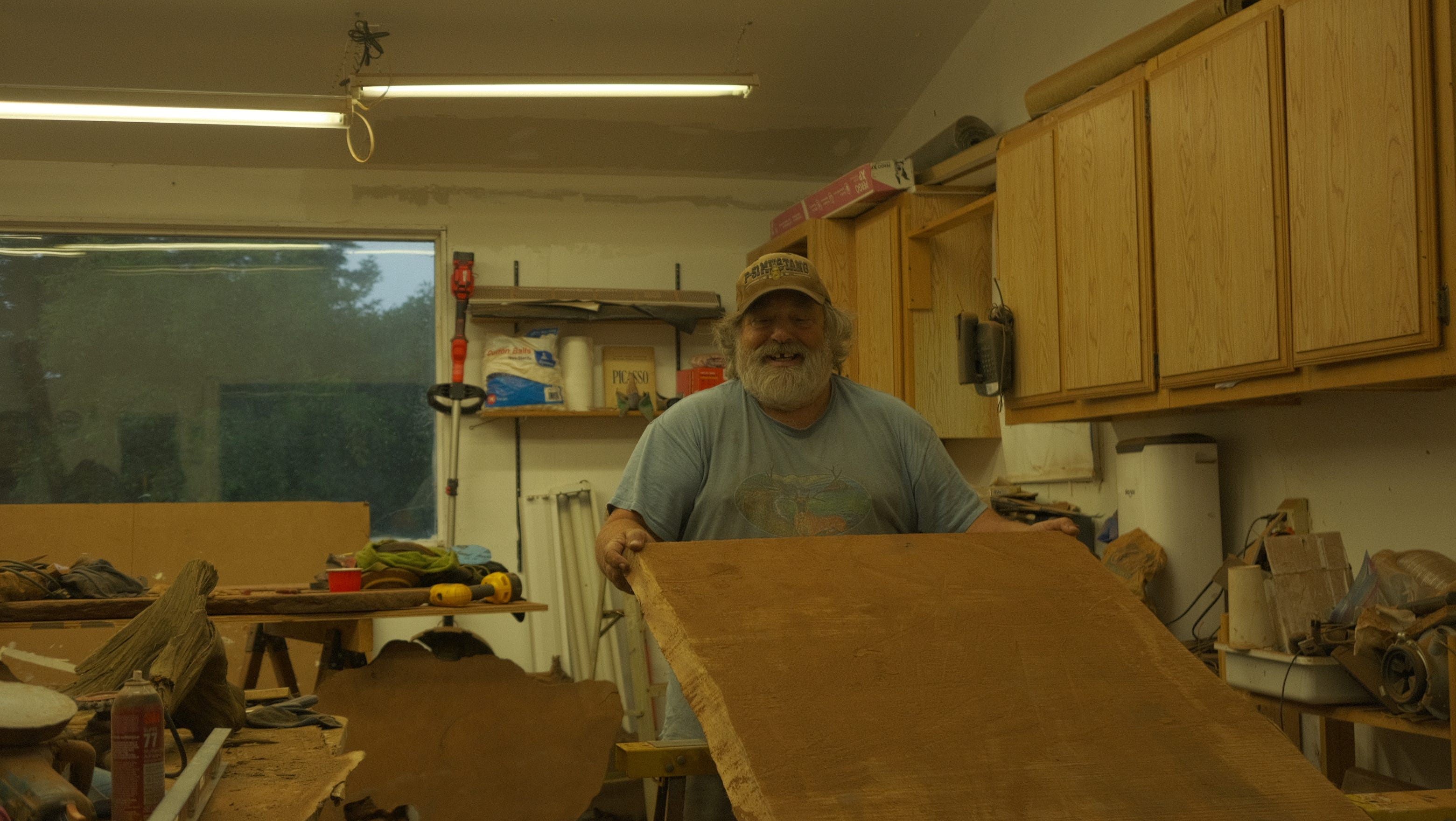
Craig Hathaway (Elk, California): woodworker/owner at Mendocino Redwood Burl
Craig is a prolific woodworker with a showroom in Elk of his redwood tables. I bought the slab in this picture for 100 bucks and made my graduate school desk out of it. We keep in touch over text, and he’ll occasionally send me a picture of his latest piece. He inspired me to stick to biodegradable finishes in my own work, showing me that mineral oil can be a better choice than polyurethane.
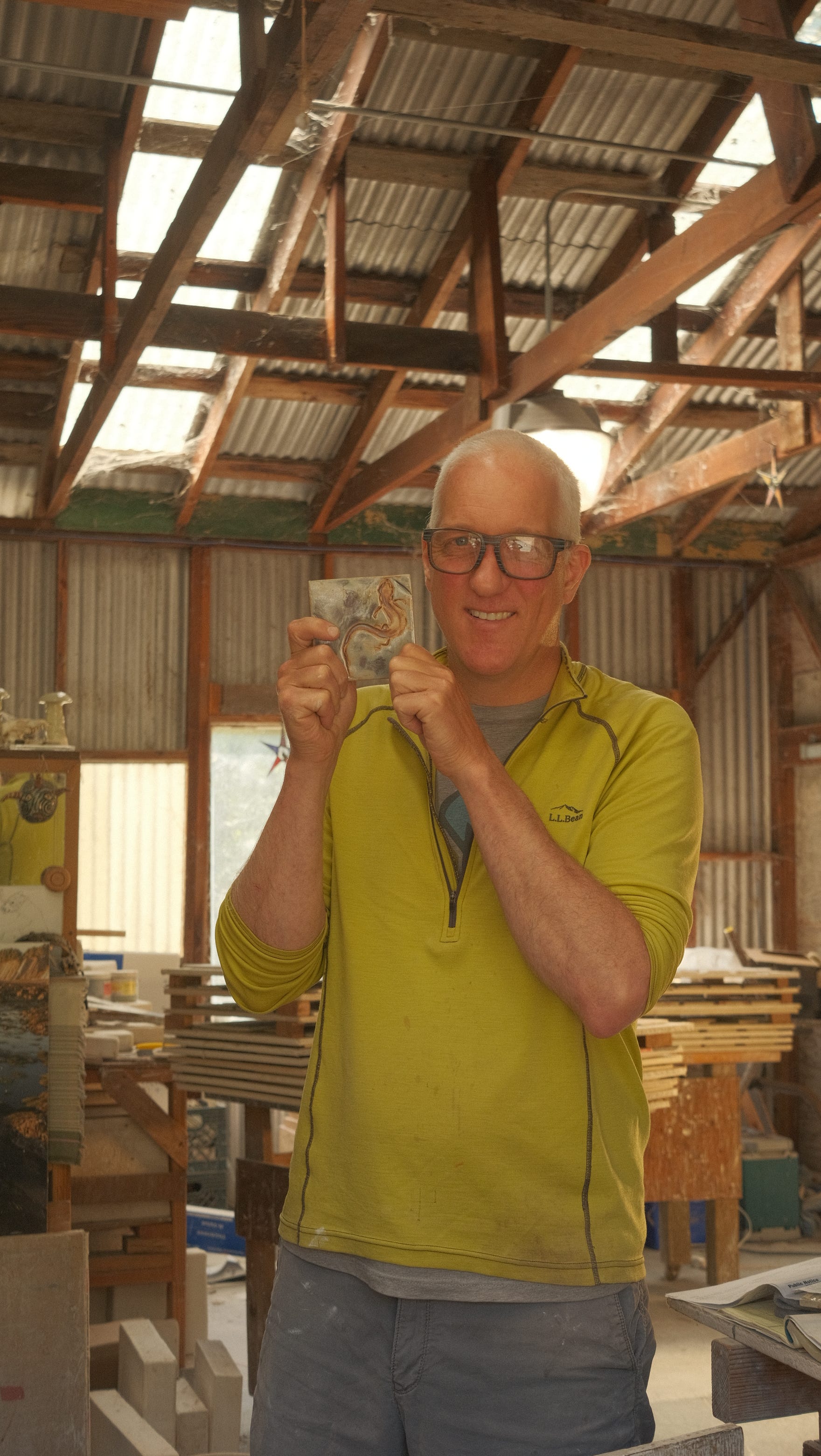
Matt (Point Arena, California): ceramic artist
Matt owns Point Arena tiles, open most days. My graduate school work desk, made from the slab pictured above, is inlaid with Matt’s tile (pictured here). He pressed a real dead lizard into it to create that imprint.


Adriana (Hornopirén, Chile): beekeeper & farmer
Chile’s geography contains multitudes. The famous mentions are the Atacama desert and Torres Del Paine, but it was the unassuming middle - Patagonia Verde - where I found soul. In Chile, where trails are a suggestion, you are lucky if a national park has a road you can drive up. I loved this about it.
In Hornopiren, a small town at the foothills of the Andes that you can only get to by ferry, we met a beekeeper named Adriana De Lourdes Marcos Sobarzo. Adriana runs a small honey shop in Hornopiren, selling Miel Pisco under the table if she likes you enough. She gave us a tour of her bees and goats, who had just given birth to lambs. Adriana quit her retail job in Puerto Montt because she realized she wasn’t happy and started a farm instead. Amid a language barrier*, she gifted us large Nalca stalks and sent us on our way. We liked the Nalca (or Gunnera Tinctoria) at first but were mostly bewildered by what to do with the rest of it, since we started with 4 feet and managed to get through 2. I don’t have a picture of Adriana**, but I did take photos of the bee homes and the shack where she brews her moonshine.
—
*I can speak Spanish, but not small town Chilean Spanish
**I always ask for consent before taking photos of people. I also think it’s important to know your subject’s name before you photograph them.